

FAQ
Snel antwoord op Frequently Asked Questions
Lees je graag?
Scroll verder naar beneden voor uitgebreide uitleg over geselecteerde begrippen
What can I expect?
Lorem ipsum dolor sit amet, consectetur adipiscing elit, sed do eiusmod tempor incididunt ut labore et dolore magna aliqua. Ut enim ad minim veniam, quis nostrud exercitation ullamco laboris nisi ut aliquip ex ea commodo consequat.
Before treatment, we will have a short talk with each other (and fill in a health history form), during which I will ask you specific questions designed to make sure there are no contraindications that would prevent me from treating you (contraindications).
No. But it is best if you can give an accurate picture of your health and injuries on your anamnesis or health history form (even those you don't think are relevant). This enables your therapist to prepare, to take caution where caution is needed, to avoid treatment if necessary, and to design the most appropriate and effective treatment for you.
No.
In fact, I prefer not.
With some people this can bring discomfort (and/or the wrong expectations). The point is to be comfortable.
Having said this, I obviously do require the area I am working on to be exposed, as I need to perform the massage on bare skin. Also, one of the essential features of (my) massage is to harness the neglected power of touch and how it reaches into 'forgotten' memory (read more about this in my blog post).
However, for your comfort, after working on one of your legs, for example, I can cover your other leg or the upper half of your body with a soft towel.
There are some massage techniques whereby you can remain clothed, such as chair massage (stoelmassage). However, this is not in my repertoire.
Before your massage, let me know which parts of your body you want me to avoid. For example, many clients aren’t comfortable with having their abdominal area massaged. Your massage therapist will know how to avoid any sensitive areas you identify and still give you a therapeutic experience.
You should always feel free to express any discomfort when undergoing a massage. However, avoid intense chatting during your session. This activates the brain, gets in the way of relaxation and can even lead to increased muscular tension and limit the effectiveness of your massage experience.
Money matters
Payment takes place either before or after the session, either in cash or (preferably) by card. I have a portable card payment device that allows you to pay with your bank card or any credit card.
After payment you will automatically receive an invoice via email (I can also print one and send this to you if you prefer).
Unfortunately, no.
This may change in the future, but for now most masseurs and massage therapists fall within the wellness industry and are therefore not covered by health insurance companies.
If you book your appointment via the booking page, you will automatically receive an email confirmation, as well as an email reminder two days before your appointment. Both emails contain a link for you to cancel your appointment if necessary.
If you book via the telephone, I will manually send you these emails and reminders (as well as an SMS one day in advance).
If you need to cancel your appointment, please do so at least two days in advance.
Now for something I hate to have to write...
Since I have to pay rent for the use of the massage studio (House of Vatality in Hilversum), I will need to charge you 50% if you cancel one day in advance and 100% for same-day cancellations or if you do not show up for your appointment (without a reasonable explanation).
What can I expect?
Lorem ipsum dolor sit amet, consectetur adipiscing elit, sed do eiusmod tempor incididunt ut labore et dolore magna aliqua. Ut enim ad minim veniam, quis nostrud exercitation ullamco laboris nisi ut aliquip ex ea commodo consequat.
Before treatment, we will have a short talk with each other (and fill in a health history form), during which I will ask you specific questions designed to make sure there are no contraindications that would prevent me from treating you (contraindications).
No. But it is best if you can give an accurate picture of your health and injuries on your anamnesis or health history form (even those you don't think are relevant). This enables your therapist to prepare, to take caution where caution is needed, to avoid treatment if necessary, and to design the most appropriate and effective treatment for you.
No.
In fact, I prefer not.
With some people this can bring discomfort (and/or the wrong expectations). The point is to be comfortable.
Having said this, I obviously do require the area I am working on to be exposed, as I need to perform the massage on bare skin. Also, one of the essential features of (my) massage is to harness the neglected power of touch and how it reaches into 'forgotten' memory (read more about this in my blog post).
However, for your comfort, after working on one of your legs, for example, I can cover your other leg or the upper half of your body with a soft towel.
There are some massage techniques whereby you can remain clothed, such as chair massage (stoelmassage). However, this is not in my repertoire.
Before your massage, let me know which parts of your body you want me to avoid. For example, many clients aren’t comfortable with having their abdominal area massaged. Your massage therapist will know how to avoid any sensitive areas you identify and still give you a therapeutic experience.
You should always feel free to express any discomfort when undergoing a massage. However, avoid intense chatting during your session. This activates the brain, gets in the way of relaxation and can even lead to increased muscular tension and limit the effectiveness of your massage experience.
Money matters
Payment takes place either before or after the session, either in cash or (preferably) by card. I have a portable card payment device that allows you to pay with your bank card or any credit card.
After payment you will automatically receive an invoice via email (I can also print one and send this to you if you prefer).
Unfortunately, no.
This may change in the future, but for now most masseurs and massage therapists fall within the wellness industry and are therefore not covered by health insurance companies.
If you book your appointment via the booking page, you will automatically receive an email confirmation, as well as an email reminder two days before your appointment. Both emails contain a link for you to cancel your appointment if necessary.
If you book via the telephone, I will manually send you these emails and reminders (as well as an SMS one day in advance).
If you need to cancel your appointment, please do so at least two days in advance.
Now for something I hate to have to write...
Since I have to pay rent for the use of the massage studio (House of Vatality in Hilversum), I will need to charge you 50% if you cancel one day in advance and 100% for same-day cancellations or if you do not show up for your appointment (without a reasonable explanation).
Down-to-Earth?
-
 Thích Nhất Hạnh, Peace is Every Step (1992)
The earth is sacred and we touch her with each step. We should be very respectful, because we are walking on our mother. If we walk like that, then every step will be grounding, every step will be nourishing.
-
 Thích Nhất Hạnh, Peace is Every Step (1992)
Kiss the Earth with your feet.
Bring the Earth your love and happiness.
The Earth will be safe
when we feel safe in ourselves. -
 Yuval Noah Harari
If our identity was less connected to the inventions of our minds and more embedded in our bodies, I think it will be a an important step, not just for tackling the climate crisis but for tackling all the major problems.
The 'down-to-earth' concept that try to embody in my massage is part of a larger attitude to life and living. It is one aspect of a (yogic) philosophy that is convinced of the power of treading lightly, of bringing all things to their terrestrial mother and to live a more simple - and sustainable - life.
"Belonging to a territory is the phenomenon most in need of rethinking and careful redescription; learning new ways to inhabit the Earth is our biggest challenge. Bringing us down to earth is the task of politics today."

It is often believed that the Buddha once said that "the mind is everything you think you are becoming." Part of regulating, or being more in tune with your mind is to bring it back to where your body is; to to become aware of the place and space, the ground on which your body relies.
To heal the bodymind – and, in my opinion, the world – it is essential to relearn how we touch the ground with our feet. We must remember that the ground holds us, supporting us as we walk, run and fall.
We often believe that we need to add a lot of salt and different spices to a soup to make it better, or that we need to invent even more complicated systems and technologies to solve our everyday and global problems. But a simpler solution often stares us in the face. It means removing what we don't need, putting less on our shoulders instead of more, simplifying the routines and systems we find ourselves in so that we can actually begin to understand what's going on. All of this is part of the need to bring things back down to earth. I believe this begins and ends with our bodies.
How do we stand or walk in the world? Are we even aware of our own attitude or posture? Our posture is more than the physical positioning of our body. It reflects how we think about things and the way we interact with the people around us and with our environment as a whole. Our posture reflects our attitude to life.
The Holistic Approach
Het samenbrengen van verschillende methodologieën is een belangrijk aspect van een holistische benadering van gezondheid en genezing. Simpel gezegd betekent een holistische benadering dat genezing draait om de héle persoon, en niet alleen om het deel dat 'pijn doet'.
Die holistische benadering past goed bij mijn sceptische aard. Ik ben geen gelover; in niets niet. Maar ik ben wel onverzadigbaar nieuwsgierig. Als het gaat om massage en gezondheid is mijn interesse breed en holistisch. Ik specialiseer me door juist die technieken te selecteren waarvan ik denk dat ze het beste werken voor een specifiek persoon of een bepaalde situatie. Ik volg of onderschrijf dus niet blindelings alle aspecten van één enkele traditie, of van welke medische of alternatieve geneeswijze dan ook.
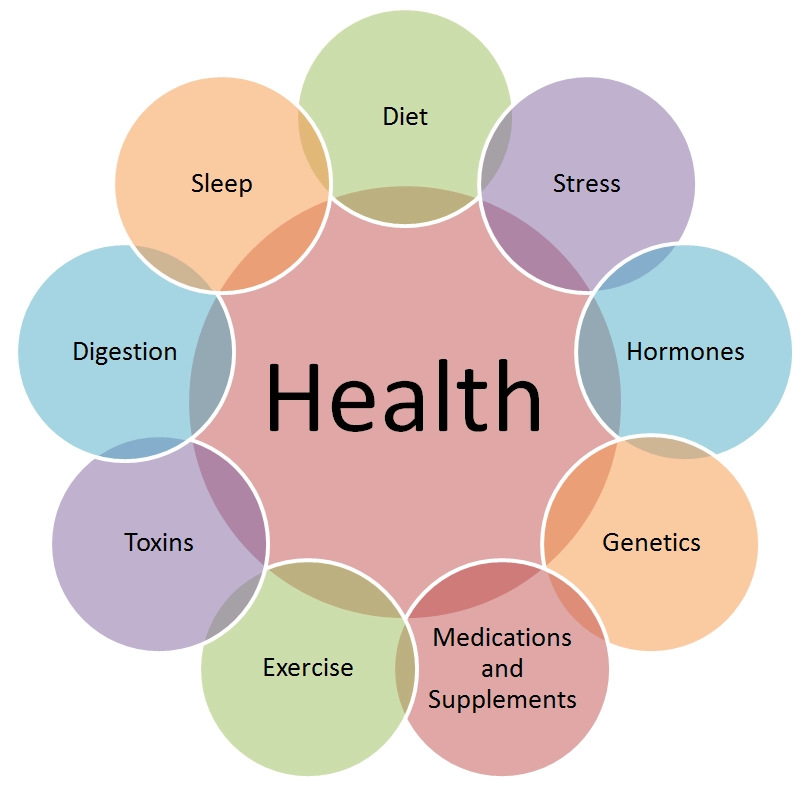
Sommigen denken misschien dat zo'n brede benadering een zwaktebod is – dat je een specifiek pad moet kiezen en je moet specialiseren in een bepaalde techniek. Ik geloof juist dat het een kracht is. Gezondheid, ziekte en genezing zijn namelijk nooit eenduidig. Problemen ontstaan vaak door uiteenlopende – en soms onachterhaalbare – redenen. Een heel mens is meer dan de som der delen van zijn lichaam. Een persoon brengt ook een eigen 'verhaal' mee: hoe je omgaat met anderen en de wereld, wat je met je lichaam doet en wat er met je lichaam is gebeurd. Met dit in gedachten betekent de holistische benadering voor mij ook dat ik nooit twee mensen exact hetzelfde behandel. Het zorgt er daarnaast voor dat ik nooit stop met leren, een methode nooit als vanzelfsprekend beschouw, en deze nooit gedachteloos toepas als een vast ritueel of protocol.
De holistische benadering kampt soms met een imagoprobleem. Velen zien het als hippiegedrag of New Age-mumbojumbo. En inderdaad, sommige behandelaars komen weleens met vreemd klinkende of zelfs dubieuze claims. Wat betekent het nou precies om 'je energie in balans te brengen', of om 'harmonie te creëren tussen lichaam, geest en... tja, ziel'?
Of het nu waar is of niet, veel mensen haken af bij wat we in het Nederlands 'zweverigheid' noemen. Inderdaad, dat is meteen de reden voor mijn nuchtere, 'down-to-earth' aanpak. Een van mijn belangrijkste doelen is om de kloof te overbruggen: tussen de scepticus en de gelovige, de cynicus en de idealist, de hippie en de wetenschapper, en de ascete en de samenleving.
Toch zitten er ook voordelen aan die 'zweverigheid', waarvan ik er een aantal probeer te integreren in mijn werk. De wetenschap helpt hier enorm bij. Zij is namelijk vaak in staat om woorden en bewijzen te geven die de vaag klinkende claims en ideeën van meer 'spiritueel' georiënteerde genezers ondersteunen. En dan is er ook gewoon de ontegenzeggelijke kracht van positief denken, optimisch zijn, en ergens - vooral in jezelf - geloven.
Fascial Release - Magic & Myth
De studie naar fascia is een relatief nieuw vakgebied (zo’n 10 tot 15 jaar). Sinds het begin van de moderne wetenschap werd en wordt fascia - een bindweefsel dat alle onderdelen van ons lichaam onthuld - tijdens anatomielessen genegeerd. Fascia wordt doorgaans weggesneden en weggegooid om de 'belangrijkere' skelet-, spier- en orgaansystemen bloot te leggen. Maar nieuwe inzichten suggereren dat het van cruciaal belang is voor de aanpak van talloze problemen, waaronder chronische pijn en immuunstoornissen. De behandeling van fascia was voorheen grotendeels het terrein van fysiotherapie en andere medische disciplines die zich richten op anatomische en fysiologische bewegingsstudies. Toch is ook massage altijd al nauw verweven geweest met de fascia, zelfs nog voordat we ons dat zelf realiseerden. Zoals een belangrijk artikel van Johns Hopkins uitlegt, de pijn die je in je spieren voelt kan in werkelijkheid afkomstig zijn van je fascia.
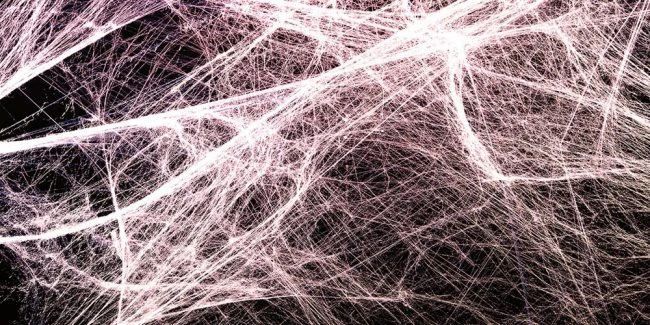
The fascia is a relatively new field of study (10-15 years). For centuries - and still today - anatomical lessons involved cutting away this connective tissue to reveal the skeletal and muscular systems. But now, treating this connective substance is showing its value in a mutitude of ways. The study of fascia has largely been the preserve of physiotherapy and other medical fields interested in the anatomical and physiologial movement studies. But massage has always been involved with the fascia, even before we knew so ourselves.
Anti-fascia
"Myofascial release" therapies have become something of a hype in recent years, and massage therapists sometimes make unproven health-claims involved with 'releasing' or 'stretching' the fascia. It's no surprise then, that the medical approach often downplays the efficacy of massage or the training or knowledge of massage therapists, and often for good reason. While it cannot be denied that massage therapists appear to be achieving 'something' when it comes to the fascia, some of the claims made by massage therapists should be scrutinised. On the other hand, let's not throw the baby out with the bathwater! By this I mean that there are also 'scientists' that still reject any importance or benefit at all to working with the fascia.
The Pain Science institute, for example (painscience.com) resorts to the (centuries-old) assumption that the fascia is primarily a "wrapping" and a "barrier against infection". That's it folks, it's just the "white stuff" between the more important muscles, organs and bones.
What they fail to take into account is that the fascia is not just a barrier but also "connective tissue". Take this insight away and everything loses perspective.
Myth 1: You can't stretch fascia.
What benefit is achieved from manipulating or 'stretching' fascia?
"Fascia is fibrous connective tissue that wraps and supports muscles, bones, tendons, ligaments, organs, nerves-pretty much everything. Fascia stretching is said to give you a feeling of deep relaxation and rejuvenation that no other regular Swedish massage could ever do. The technique called fascial stretch therapy was developed by Ann Frederick, the first "flexibility specialist" to work with athletes at the Olympics, and it aims to improve every aspect of athletic performance and recovery." https://www.shape.com/fitness/tips/fascial-stretching-benefits
Unfortunately, it turns out that the fascia is so strong that there is no scientific or (physio)logical proof that it can be stretched at all. What you can do is keep it in motion, 'hydrate' it (with supplements and movement) and retrain (or indeed 'remove') its tensile strength or the latice position to which it tends to rebound. This is how to eventually manipulate and change its overall structure and the 'stance' of your body in the process.
Myth 2. Release the Kracken!
What is meant by myofascial release (or fascial release)?
When we say 'release' we actually mean getting it all moving again. This includes mobilisation of the fascia, physical movement of the fascial connections, neurological retraining, and rehydration. Fascia can become immobile or stuck in its ways. Its function is to hold the varous muscles and organs in their place, but when we have 'trained' them to hold these tissues in the wrong way - due to bad posture or repetetive movements - the fascia may hold this habitual incorrect position. This is known as 'fascial adaptation'.
"This principle of fascial adaptation is triggered by any repetitive movements, or even a lack of movement where the fascia thickens to hold you in place. Athletic training is no different to the demands put on the body by office work. Any load which is excessive or repeated without a counterbalancing release will result in thickened, inflamed and damaged fascia. (https://paincareclinic.co.uk/conditions/can-you-stretch-fascia/)
Which brings us back to stretching. We know that trying to force fascia to stretch is not going to get us anywhere. However the viscoelastic properties of fascia also mean that it responds well to heat and (gentle) sustained pressure. This combination creates a physical change in the tissue, making it more fluid, in much the same way that the combination of heating and stirring hardened honey makes it more runny. Research has shown that maintaining heat and gentle pressure for 1-5 minutes will create positive change in the collagen lattice of fascia.
Which brings us back to stretching. We know that trying to force fascia to stretch is not going to get us anywhere. However the viscoelastic properties of fascia also mean that it responds well to heat and (gentle) sustained pressure. This combination creates a physical change in the tissue, making it more fluid, in much the same way that the combination of heating and stirring hardened honey makes it more runny. Research has shown that maintaining heat and gentle pressure for 1-5 minutes will create positive change in the collagen lattice of fascia.
Training
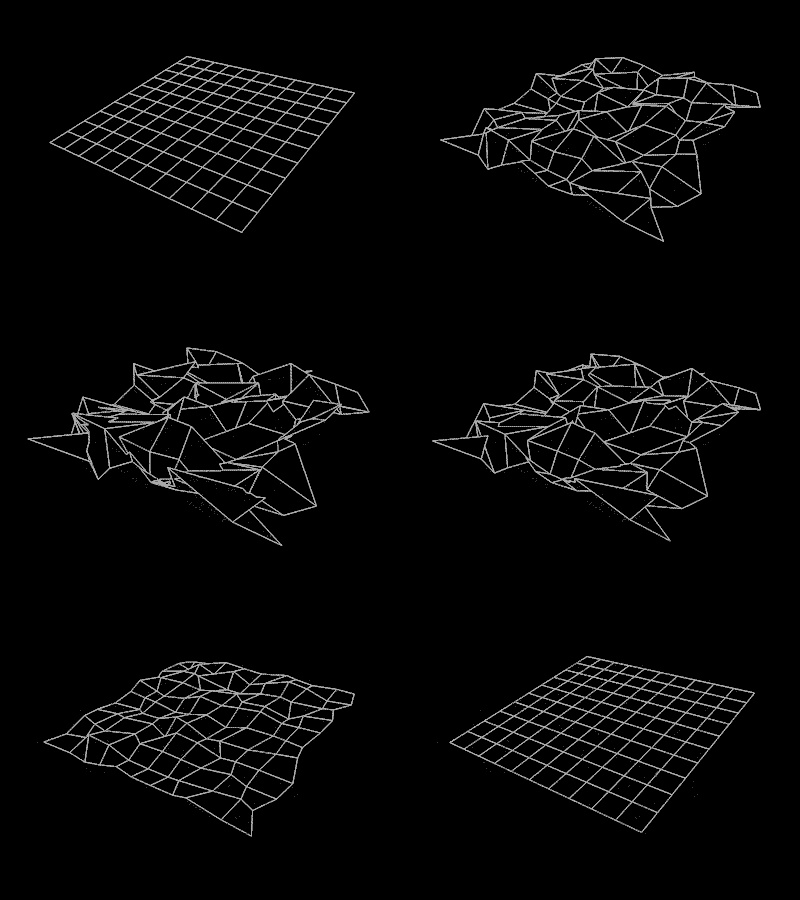
My approach, (especially with the intention Remove) is to apply the insights and techniques of such modalites as Structural Integration, Rolfing, and especially Yin Yoga; to bring fluidity and motion in restricted tissues, with the aim of eventually affecting the 'resting position' of the body and the supporting fascial lattice.
There are many practitioners who apply devices to try to achieve this. I rely on my hands and your body to 'know' what to do. For example, Tom Myers, arguably the most influential person when it comes to highlighting the importance of the fascia in physical fitness, says the following about using a foam roller in contrast with using just the hands of the massage therapist (or phyiscal therapist):
"I value the knowing hand over the unknowing object as a tool for inner body change. I can create this shear through positioning the client and adjusting my hand pressure and position constantly via sensory feedback, so I am better than a foam roller. I can see and find the ‘silent’ places of tension they don’t even know about and awaken them or ease them. I can see the whole pattern and create treatments that progressively free these adhesions in an integrated fashion. I can feel when it’s ‘cooked’."
Tom Myers: anatomytrains.com/blog
Importantly, however, my goal is to eventually help the client become self-sufficient and to provide them with the (self)awareness to continue to help themselves (I am a teacher).
"[...] believing that only a skilled clinician can stretch your fascia for you can make you believe that you need that person to “fix” you. That takes the locus of control away from you and makes you dependent on someone else for your health. That shouldn’t be the case. [...] If the occasional deep tissue massage or “fascial release” makes you feel good, that’s great but the therapist ought to be showing you ways to help yourself and prevent that pain and tightness in the future. Once you know what to do the rest is up to you." (gothamphysicaltherapy.com)
Training
Mijn aanpak (met name bij Re-move) is om de inzichten en technieken uit modaliteiten zoals Structural Integration, Rolfing en Yin Yoga toe te passen om weer vloeibaarheid en beweging te brengen in vastzittend weefsel. Het doel is om uiteindelijk de 'rusthouding' van het lichaam en de ondersteunende fasciale roosterstructuur te veranderen.
Er zijn veel behandelaars die apparaten en hulpmiddelen inzetten om dit te proberen te bereiken. Ik vertrouw daarentegen op mijn handen en op jouw lichaam om te 'weten' wat er moet gebeuren. Tom Myers – een van de meest invloedrijke personen als het gaat om het op de kaart zetten van het belang van fascia binnen fysieke fitheid – zegt bijvoorbeeld het volgende over het gebruik van een foamroller in vergelijking met de handen van een massagetherapeut:
"I value the knowing hand over the unknowing object as a tool for inner body change. I can create this shear through positioning the client and adjusting my hand pressure and position constantly via sensory feedback, so I am better than a foam roller. I can see and find the ‘silent’ places of tension they don’t even know about and awaken them or ease them. I can see the whole pattern and create treatments that progressively free these adhesions in an integrated fashion. I can feel when it’s ‘cooked’."
-- Tom Myers: anatomytrains.com/blog
Cruciaal hierbij is echter dat mijn uiteindelijke doel is om de cliënt zelfredzaam te maken, en hen te voorzien van het (zelf)bewustzijn om zichzelf te kunnen blijven helpen (ik ben immers niet voor niets jarenlang docent geweest).
"[...] believing that only a skilled clinician can stretch your fascia for you can make you believe that you need that person to “fix” you. That takes the locus of control away from you and makes you dependent on someone else for your health. That shouldn’t be the case. [...] If the occasional deep tissue massage or “fascial release” makes you feel good, that’s great but the therapist ought to be showing you ways to help yourself and prevent that pain and tightness in the future. Once you know what to do the rest is up to you." gothamphysicaltherapy.com
Links and further reading/viewing
- Karl Jacobs: https://youtu.be/cAnTP9ryYVk and https://youtu.be/FQK1oLWlCl4
- Jean-Claude Guimberteau: https://fascialconnection.lat/jean-claude-guimberteau-md-francia-2/
- Johns Hopkins University: 'muscle' pain my actually be fascia: https://www.hopkinsmedicine.org/health/wellness-and-prevention/muscle-pain-it-may-actually-be-your-fascia
- https://www.abmp.com/massage-and-bodywork-magazine/issues/mayjune-2019/structural-integration-20-iconic-deep-bodywork-1970s-emerging-new-form
- https://www.massageandbodyworkdigital.com/i/720675-september-october-2016/6?
- https://yogauonline.com/yoga-practice-teaching-tips/yoga-practice-tips/tom-myers-change-the-body-to-change-the-mind-dynamics-of-transformation-in-the-light-of-new-fascia-research/
- https://www.anatomytrains.com/blog/2024/04/15/q-a-with-tom-electric-massage-tools/
- https://www.anatomytrains.com/blog/2020/05/21/tom-myers-self-massage-practices-for-the-hands/
- https://www.tuneupfitness.com/blog/fascia-myofascial-release?srsltid=AfmBOopEYLSunTNYTt4bELSoOu_yZsRDvd6gD_l3DP09XzEjieP7N6dp
The Body Remembers
We are more than our brains
I am fascinated by an idea that runs contrary to the popular idea that “We are Our Brains”, as put forth by Dick Zwaab, for whom I nonetheless have a lot of respect (see: we are our brains). It is my contention, however, along with many others, that there is more to us than than what goes on in our brain. Experience is lodged in pathways that transcend the brain. This is a vast and complex topic, to which I will return at a later stage. For now, as a kind of teaser, or as a way to start the ‘conversation’, I want to point to the words of others. In a thought provoking article, Lia Mack, the author of Waiting for Paint to Dry (Pen L, May 2015), writes:
Your body, believe it or not, remembers everything. Sounds, smells, touches, tastes. But the memory is not held in your mind, locked somewhere in the recesses of your brain. Instead, it’s held in your body, all the way down at the cellular level. Ever notice how, on a stage full of professional dancers, everyone still moves in their own way? That’s because our cells store memories – information – about our experiences, habits, sensations, everything. We are all unique and it’s in our bodies – our skin, muscles, tendons, nerves – which we actively participate through our day to day experiences; good ones and bad.
Sometimes, the memories that our body stores are not always memories that we consciously, as the survivor, remember. You may have been too young to remember. You may have blacked out. For whatever reason, you don’t know what your body knows. As Renee Fredrickson, Ph.D. says in A Journey to Recovery from Sexual Abuse, “The traumatic and the trivial are the two kinds of information your mind represses.” Othe major Writers in the field of mind and body health in relation to trauma and Bessel van der Kolk (see for example this short video on his work: The Body Keeps the Score) and Gabor Mate (on whom I will be writing more at a later date).
My work, however, is parhaps more related to the trivial (though I do not shy away from the traumatic if it reveals iself). My focus lies in the seemingly trivial way in which we carry ourselves in day-to-day activities, which can be the very storage centre of significant memory as well as change. It is the seemingly trivial that offers pathways to change and healing in the way that it yields to 'rememory' - or forgetting - which is what I utilise in my third intention re-move.
I will have much more to say on this topic but I choose for now to quote the words of the most wonderful poet Rainer Maria Rilke:
… it is not enough to have memories. You must be able to forget them when they are many, and you must have the immense patience to wait until they return. For the memories themselves are not important. Only when they have changed into our very blood, into glance and gesture, and are nameless, no longer to be distinguished from ourselves – only then can it happen that in some very rare hour the first word of a poem arises in their midst and goes forth from them.
Other Bodies
To change the tone a bit now, or to add to the confusion and the wonderful complexity of memory, consider that our body also remembers the bodies of others whom we have touched or have been touched and moved by – both positively or negatively.
In a short article, called, “The Body Remembers All”, the Yogi mystic Jaggi Vasudev, associates this kind of meeting and remembering bodies with karma (I will be posting more on the common misconceptions of Karma another time). Drawing from his own traditions, he calls this runanubandha:
Runanubandha is a certain aspect of karma; it is a certain structure of karmic substance. It happens because of a certain amount of meeting and mingling that happens between people. Wherever there is a certain amount of meeting and mingling, some runanubandha is created.
Especially when two bodies come together, the runanubandha is much deeper. It is a kind of recording in the body; the body is keeping a record of everything that has happened. If intimacy happened with another body, it is keeping a record of that particular kind of energy. The Body Remembers All
The Mind/Body Problem... or Potential
Part of the problem in thinking about memory, mind and the body is that we think about these things as separate entities. This is fundamentally a Cartesian perspective (“I think therefore I am”). The truth is, there is very little sense in talking about memory in these terms, as if it were something that could exist as the experience of either the mind or the body. There is no seperation. What we perceive as someting fo the mind passes into the body and vice versa. Unfortunately, the process is so complex and surreptitious that we are largely unaware that this is taking place. The result is that the 'storage' of this memory becomes unconscious, or as I think of it, subcutaneous. Nevertheless, these memories play a crucial role in the restrictions and potential ways we conducts ourselves, the way we hold and move our bodies through space and time, whether we slouch or stand tall, to mention but two of many ways in which our stance becomes us. As Thomas Fuchs puts it:
Unconscious fixations are like restrictions in the spatial potentiality of a person, caused by a past which is implicit in the present and resists the progress of life; this includes traumatic experiences in particular. Their traces are not hidden in an interior psychic world, but manifest themselves – as in a figure-background relationship – in the form of “blind spots” or “empty spaces” in day-to-day living. They manifest themselves in behavior patterns into which a person repeatedly blunders, in actions that she avoids without being aware of it or in the opportunities offered by life which she does not dare to take or even to see. The unconscious of body memory is thus characterized by the absence of forgotten or repressed experiences, and at the same time by their corporeal and intercorporeal presence in the lived space and in the day-to-day life of a person.
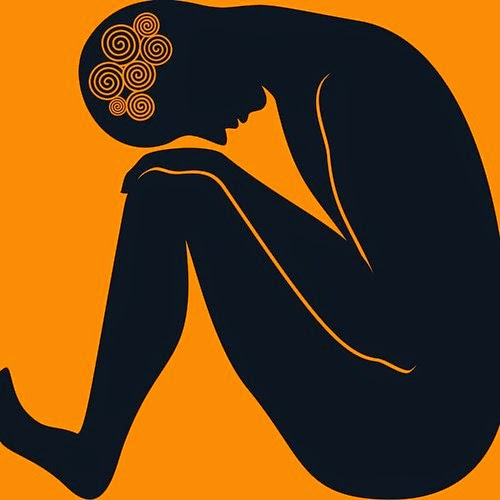
One of the things to be concluded from this is that, what we are, the person we have become, has much to do with things we have remembered of which we no longer are aware, and that this is not something that lies in the past but in the present way in which we – our bodies – continue to move through the space of everyday life. Our very identities are processes that are ongoing and always changing. The upside to this is that, if memories are processes we cary with us in our body's behaviour, not just in deep vestiges in the brain’s forgotten cavities, then we also have the potential to shape and reshape our bodies and thus also our memories.
Practical Memory Release
There are so many ways in which we can think of how the body remembers, and what to do with this insight. What if we start seeing our bodily discomforts, pains and tensions from the perspective of an informative friend? Not to mention that it always is working on your side: do you have to think and work hard to breathe, digest? Experience the gift of your tensions. Listen to what they tell you and see them as the road back to balance.
Links on the practical side of working with Body Memory:
- how-to-reconnect-with-our-body-and-attain-health
- http://tinybuddha.com/blog/how-to-release-the-painful-memories-emotions-stored-in-your-body/
Links on Memory, The Uncanny, Trauma, Body, etc.
- https://www.survivormanual.com/how-to-deal-with-body-memories-as-a-survivor-of-sexual-assault/
The Neuroscience of Body Memory
https://partiallyexaminedlife.com/2011/12/16/memory-body-and-truth/ - http://makemag.com/review-the-memory-of-place-a-phenomenology-of-the-uncanny-by-dylan-trigg/
- https://www.amazon.com/Meditations-First-Philosophy-Hackett-Classics/dp/0872201929/ref=sm_n_au_dka_NL_pr_fal_0_2?adId=0872201929&creativeASIN=0872201929&linkId=96533e3a72ea395c3049f271b9e552ba&tag=theparexalif-20&linkCode=w70&ref-refURL=https%3A%2F%2Fpartiallyexaminedlife.com%2F2011%2F12%2F16%2Fmemory-body-and-truth%2F&slotNum=0&imprToken=.5h02X4TUzTFrLjJUMSEnQ&adType=smart&adMode=auto&adFormat=strip&impressionTimestamp=1565874303468
- Julian Barnes, The Sense of an Ending.